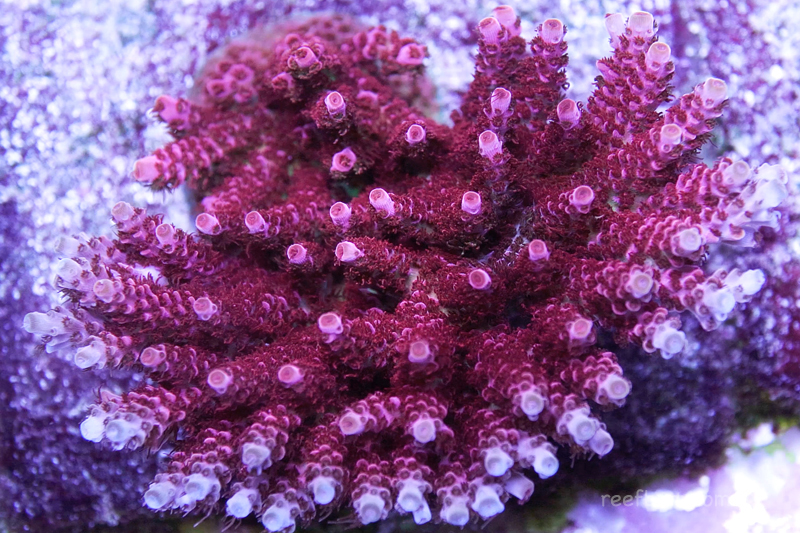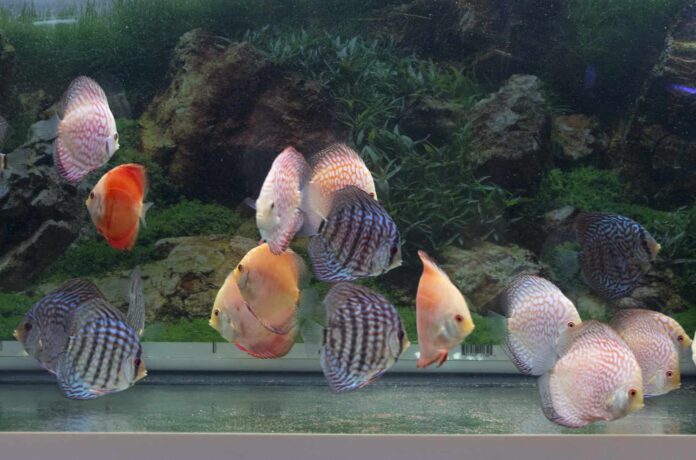
Home Blog Page 4

Are They Suitable for Your Tank?

0


Sharing is caring!

If you’ve been in the aquarium hobby for a while, you’ll probably have heard of UV sterilizers. By passing water through UV light, the sterilizer reduces the number of algae and bacteria suspended in the water column.

But while many people claim that UV sterilizers are useful for clearing up cloudy or green water, there are other ways to do that, too. So do you really need this optional aquarium accessory? Here, you’ll find out.

What Is a UV Sterilizer?

A UV sterilizer is an optional piece of aquarium equipment used to reduce the presence of algae, bacteria, and other pathogens within the water column.

The unit works by running the tank’s water past a germicidal fluorescent UV lamp that damages the DNA of the microorganisms within the water column, thereby preventing them from reproducing and reducing their numbers within days.

Aquarium with UV Sterilizer

UV sterilizers are usually either standalone units that use a motor to pump water through a sealed chamber or are passive units without a motor that rely on a canister filter to pump water through them.

Very occasionally, canister filters and hang-on-back filters come with UV sterilizers already installed.

When Are UV Sterilizers Used?

Most aquarium owners don’t use UV sterilizers as they are strictly an optional accessory. Those who do choose to keep one typically only turn it on for short periods to treat green or cloudy water, and to help contain bacterial or even parasitic and fungal infections.

For Treating Green or Cloudy Water

UV sterilizers are especially useful in clearing water of algal blooms that turn the water green, or bacteria blooms that make the water cloudy. When effective, UV treatment may even clear the water within a few days.

For Treating Infectious Diseases

Some aquarists also believe that, when used at the right time, UV sterilizers can help to contain outbreaks of parasitic infections like ich and help to reduce the chances of bacterial infections on vulnerable specimens.

While a UV bulb won’t cure fish infections without additional treatments such as medication, it may help to reduce the pathogens from reproducing, as well as reduce the risks of further outbreaks.

Because of this, some aquarists choose to turn their UV units on when their fish are particularly stressed or injured and therefore more susceptible to infection.

When UV Sterilizers Won’t Help

It must be understood that UV sterilizers can only treat microbes that are already suspended within the water column. Organisms that already are floating on the surface or adhered to rocks, glass, plants, gravel, or your aquatic pets won’t run through the unit and are therefore left untreated.

So, while UV can be very effective for treating algae and cyanobacteria suspended in the water, it won’t be much help for treating algae outbreaks on your substrate, glass, and aquarium décor. Similarly, it will only treat parasites in the phase where their offspring are suspended in the water.

Additionally, UV sterilizers are unlikely to help if your water has been stained yellow or brown. Such coloration is usually caused by tannins that are released by materials such as driftwood, peat, or dead leaves.

In some cases, tannins are beneficial, but they can also be removed with a carbon filter if you prefer to get rid of them.

When UV Sterilizes Should Never Be Used: Cycling a New Aquarium

Aquarium filter output of a tropical freshwater aquarium

The one instance where UV sterilizers could prove truly detrimental is when a new aquarium is being cycled.

During cycling, beneficial nitrifying bacteria are busy reproducing and spreading themselves around the aquarium. Not only do they take up residency in your filter, but they also proliferate in the tank’s gravel, and even among rocks and plants.

Since the UV light will sterilize any nitrifying bacteria that are suspended in the water and passing through it, it should always be switched off until the bacterial colonies are firmly established and the tank is fully cycled.

The Pros of Using UV Sterilizers

  • Clears green water by combating algae and cyanobacteria in the water column
  • Clears cloudy water by reducing bacterial blooms in the water column
  • Reduces the number of active pathogens such as bacteria, parasites, fungi, and viruses that are suspended in the water
  • Motorized models increase water circulation and potentially aeration, too
  • Usually quiet and discreet

The Cons of UV Treatment in Fish Tanks

  • Extra investment and increased electricity costs
  • Bulbs need replacing every 6-24 months (typically around 9 months) if the unit is left on and some models don’t feature replaceable bulbs
  • Doesn’t treat algae and pathogens that are adhered to the rocks, plants, glass, or gravel
  • May prove ineffective if bulbs are not strong enough or water passes through the unit too quickly

Featured Products

As we’ve already discussed, UV sterilizers either come as stand-alone units or are attached to an existing canister filter. Here we take a closer look at popular models of each kind that have been receiving the most positive reviews from customers.

COODIA Internal Green Water Killer Aquarium Filter Tank U-V Pump

If you want to try a UV sterilizer without breaking the bank, this handy little standalone unit offers a great solution. While much cheaper than models from big brands, customers of the COODIA ‘Green Water Killer’ report equally high satisfaction rates.

The unit runs on just 5 watts of electricity, meaning it’ll add very little to your electricity bill. Handy features like an optional air intake/bubbler and LED light to indicate when the UV bulb needs replacing shows thoughtful design, too.

Suitable for saltwater and freshwater tanks, many customers confirm that it can clear up green water in 3-7 days. While the manufacturers claim it can handle tanks of up to 75 gallons (more than many of its competitors), some users with larger tanks have reported it less effective.

What we like:

  • Very inexpensive
  • Mostly upbeat reviews suggest the unit is effective in most situations
  • Very low 5-watt energy consumption
  • Optional air intake allows for increased aeration
  • Indicator light signals time for bulb replacement

What we don’t like:

  • Equipment from lesser-known brands is sometimes less reliable
  • Some customers have reported faulty parts
  • Customers with tanks over 50-gallons sometimes report ineffective performance

Fluval In-Line UV-C Clarifier

An efficient passive UV sterilizer from a trusted brand, the Fluval In-Line Clarifier has been designed to attach to canister filters with 5/8” (16 mm) hosing.

As you’d expect from Fluval, the model features innovative technology such as CCFL (Cold Cathode Fluorescent Light) technology that runs cooler than traditional UVC bulbs and lasts up to 30,000 hours (3X longer).

Most customers report high levels of satisfaction with performance and the 2-year warranty offers reassurance that the unit has been made to last.

Important: Please check your canister filter’s hosing diameter is compatible before purchasing, as some models such as the Fluval FX series feature incompatible hosing!

What we like:

  • Fluval is a veteran brand renowned for solid workmanship and products you can trust
  • Good reviews suggest this sterilizer is effective for a wide variety of applications
  • Compact design means the unit is discreet and takes up little tank space
  • A 2-year warranty for defective parts and workmanship gives extra confidence in product quality

What we don’t like:

  • While the UV bulb is long-lasting, it can’t be replaced
  • Not compatible with all sizes of canister filter hosing

Alternatives to UV Treatment

The most common reason for people installing a UV filter is to clear up green or cloudy water, but for that job, other alternatives can be equally effective and sometimes even longer lasting.

Better Tank Maintenance

Pumping water out of the aquarium

Green or cloudy water in aquaria usually indicates poor water quality that has become too high in nutrients.

When uneaten fish food, dead leaves, algae, and fish waste break down, nitrates and phosphates are released into the water which causes algae and bacteria to bloom. While UV sterilization might help to reduce the symptoms, it’s much better to tackle the root cause of the problem.

Here’s our quick list of tank maintenance basics for keeping water quality and water clarity consistently high:

Reduce Feeding

Because uneaten fish food and excessive fish waste are such major causes of poor-quality water that becomes cloudy, it’s imperative to avoid overfeeding. Indeed, overfeeding is one of the leading causes of poor water quality and fish health issues, especially for beginners.

To overcome this unnecessary issue, never feed more than your fish can eat within 2 minutes. Clean up any leftover food before it begins to break down and foul your water.

Carbon Filtration

Granules of filter carbon for aquarium

You may have noticed that many aquarium filters on the market feature carbon filtration, but not all aquarists are well-versed in what that means.

Typically, carbon filtration refers to a filter compartment that houses small pieces of activated carbon, also known as activated charcoal. As water passes through the carbon, its sponge-like structure effectively draws out very small impurities that other types of filter media miss.

By reducing small particles, tannins, and certain dissolved nutrients in the water such as phosphates, carbon filters remove the food that problematic algae and bacteria thrive on, effectively reducing their numbers within days.

While results may not be as fast or dramatic as UV sterilization, when combined with good tank maintenance, carbon filters will usually help your water to remain crystal clear in the long run.

The Downsides of Carbon Filtration

If you do decide to install a carbon filter, just be warned that some of the nutrients it filters out are also necessary for plant growth. Phosphates, in particular, are very important for healthy plant growth, meaning that some planted aquarium enthusiasts avoid carbon filtration altogether.

Additionally, carbon will also filter out many types of fish medication as well as tannins from the water. So, if you are attempting to medicate your fish or aiming to create amber-colored, tannin-filled water, carbon filtration isn’t an option.

Conclusion – Do You Need a UV Sterilizer?

After weighing up the pros and cons of UV sterilizers, what’s the verdict? We conclude that most aquarium owners don’t need a UV sterilizer, but some might find one useful.

With proper tank maintenance and the option of carbon filtration, most aquariums should retain clear water, free from excessive algal or bacterial blooms – which renders UV sterilization unnecessary.

On the other hand, if you’ve tried everything else and are still having difficulties in achieving clear water, you could give one a try. UV treatment may be especially appropriate for those who want crystal-clear water without having to use a carbon filter.

Sharing is caring!


Source link

Our Top 10 Must Have SPS Corals

0


I have many, many favorite SPS corals and my tastes have changed over the years. But some of my early favorites are still at the top of my list of must have SPS. Granted, a list of top SPS is very subjective since it comes down to personal preference and taste. What appeals to one reefer may not strike the fancy of another reefer. However, certain corals do generate a lot of  buzz among “stick heads”. With that said, here is a list of my top 10 favorite SPS corals.

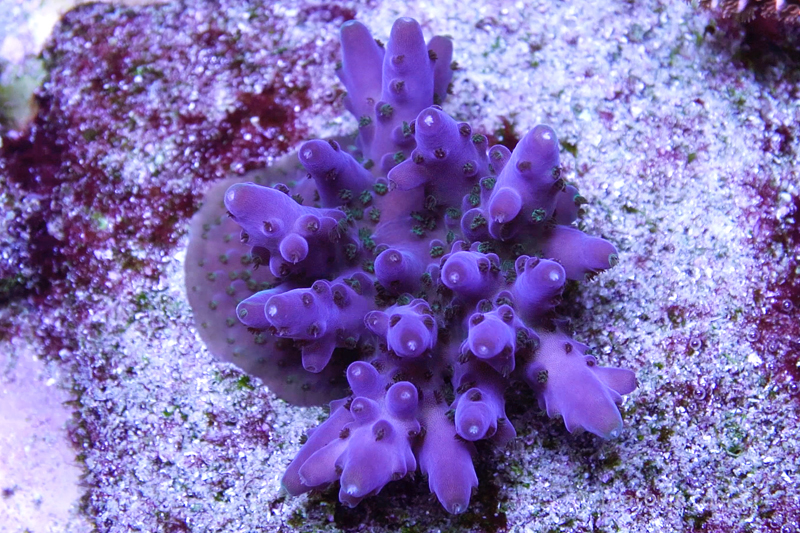
#1 Tyree Purple Monster

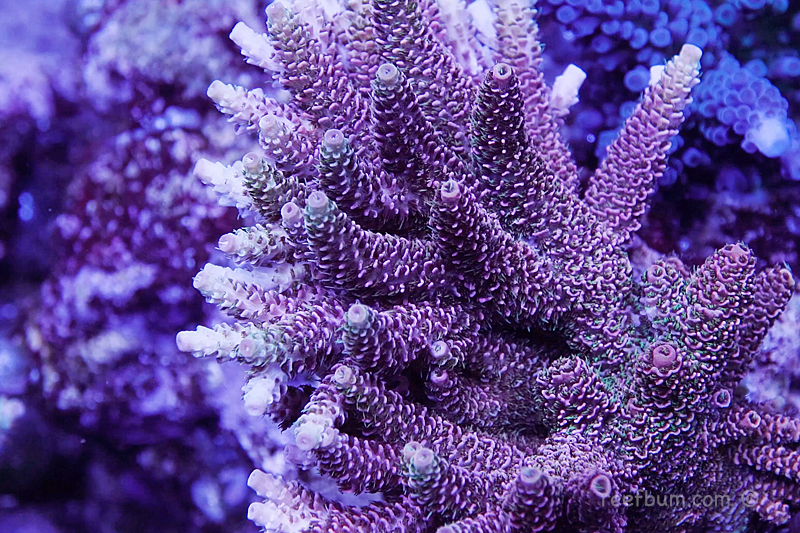
The Tyree Purple Monster is an extremely slow grower. It typically has white polyps with very dense and thick branches. The Purple Monster is one of those original old school corals and today it can be hard to find. It’s a must have for me due to its intense deep purple coloration. And I kinda dig having something rare 😉

Tyree Purple Monster

#2 Oregon Blue Tort

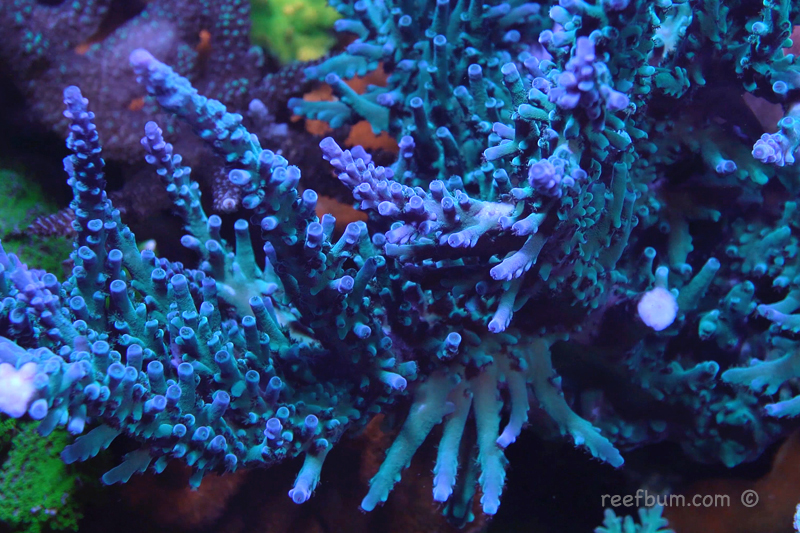
Oregon Blue Tort

The Oregon Blue Tort is about a blue as it gets for a coral. It’s just striking and I couldn’t imagine not having one in each of my tanks. Some folks do confuse this Tortuosa with another Tortuosa, the Cali Tort, another one of my favorites, which has some greenish hues on its body.

#3 ACI Pink Spathulata

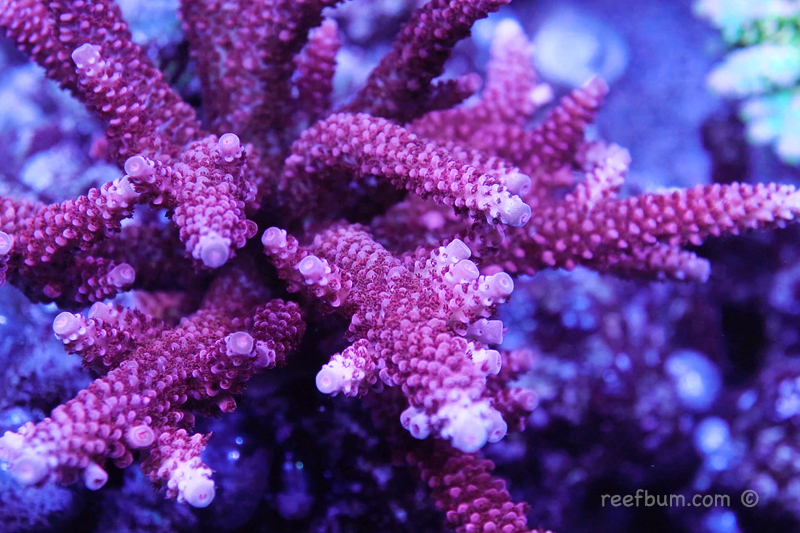
I acquired the ACI Pink Spathulata about a year ago directly from ACI Aquaculture and it has quickly become one of my favorites. I don’t recall having too many Spathulatas but this one just stands out with its pink corallites and pink and green polyps.

#4 BC Joker 2.0

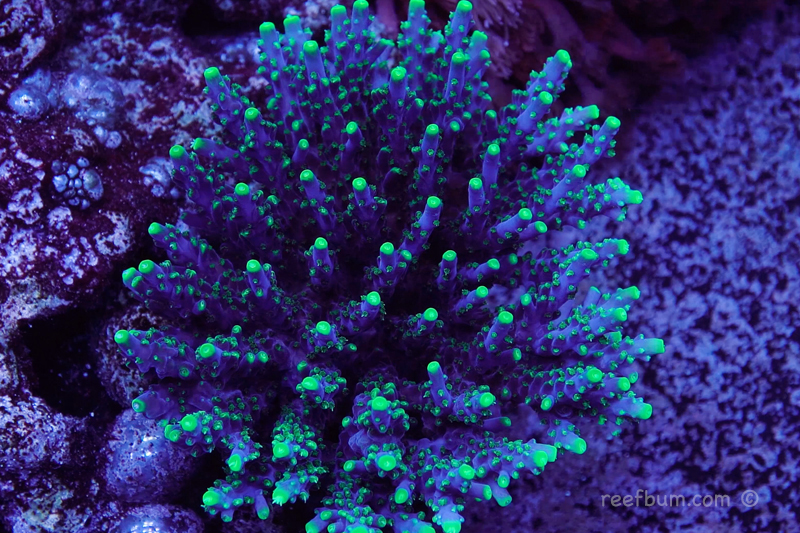
The Battlecorals Joker 2.0 has deep purple branches and glowing greenish and yellow polyps. The tips of this coral are green and yellow as well and that makes it really pop…a very unique piece.

BC Joker 2.0

#5 PC Rainbow

The PC Rainbow is another classic, OG SPS that is bright red. This one grows fast for me in my peninsula tank under LED’s.

PC Rainbow

#6 BC Hyperberry

I like strawberry shortcake acros A LOT and the Battlecorals Hyperberry is perhaps one of the nicest I have ever seen. I am also a big fan of the Unique Corals Original Strawberry Shortcake.

BC Hyperberry

#7 Jason Fox Homewrecker

The Jason Fox Homewrecker is striking and comes in at number seven on my list. I am not into this whole rainbow tenuis craze but this is one of the few rainbow tenuis that I think lives up to the hype. In my systems this coral seems to color up better under higher PAR values.

Jason Fox Homewrecker

#8 ACI Cherry Pie Millie

The ACI Cherry Pie Millie is another coral I acquired about a year ago from ACI. I am a real sucker for any millie, but I am very partial to red and pink millies. This one is super pink.

ACI Cherry Pie Millie

#9 Palmers Blue Millie

Another one of my favorite millies is the Palmers Blue Millie. This classic checks in at number nine on my list. You don’t see too many blue millies out there so this is one of my must have millies. I am also into sunset millies like the AquaSD Rainbow Millie.

#10 PC Superman Table

PC Superman Table

I also really dig tabling across so I would be remiss if I didn’t include one on my list. The PC Superman Table is very bright red and thus makes the cut at number 10. This is another classic, OG coral from Pro Corals.

And finally, some honorable mentions….both are classics. One is the Tyree Pink Lemonade. It has beautiful contrasting colors with bright pink polyps and lemon colored branches. Another one is the ORA Pearlberry. This coral has purplish tips, greenish corallites and a gorgeous pearlescent coloration on the branches. There are a lot of imitations out there so beware.

Well, that’s my list and I am sticking to it!

Additional Resources

If you would like some help with a new tank build, including help designing a custom aquarium, or help re-configuring your current setup then you can visit this page for more information. And if you are looking to add some equipment, I do sell GHLPax BellumReef Octopus Calcium and Kalk Reactors and Royal Exclusiv products, including Dreamboxes, which is the equipment I use and recommend. I also sell Reef Brite metal halide and LED fixtures as well as Maxspect & IceCap Gyres.

As for additional insights and information, please explore my many other reef tank and SPS related articles as well as my YouTube channel. For an even deeper dive into reef tank care you can check out my Reef Keeping Master Class. This online course is an immersive and one of a kind educational tool designed to help reef aquarium hobbyists build and maintain a beautiful SPS reef tank. The course is a series of video presentations with some supplemental video from my YouTube channel. There are also quizzes to help students retain and understand the information presented in the course.

Need some frags…..I can help with that as well 🙂 Please visit my SPS Frag store to see what is available.


Source link

Bare Bottom Home Tanks for Cichlids: The Pros and Cons

0


Sharing is caring!

When it comes to cichlid tanks, most people prefer to create a natural-looking tank that resembles their natural environment. A few hobbyists and professionals, however, are choosing bare-bottom tanks instead of substrate.

So what are the pros and cons of bare-bottom tanks? Should you be trying them out? That depends on your priorities, so let’s take a closer look.

The Advantages of Bare-Bottom Tanks

Easier To Clean

aquarium hacks you should not try

The primary reason that some aquarists opt for bare-bottom tanks over substrate is that they believe they’re easier to clean.

With no sand or gravel in the way, the fish keeper can easily hoover out any uneaten food, fish waste, and debris with a siphon. This is deemed especially important in breeding tanks where it’s important to maintain hygienic conditions to prevent disease and water poisoning.

Because certain pathogens can hide in sand and gravel, some people conclude that going bare-bottom will reduce their numbers. On the other hand, others report that harmful bacteria can build up on the glass bottom without substrate.

As with many aspects of this topic, it depends on who you ask!

Prevents Digging

Aulonocara freshwater fish

Some aquarists avoid substrate simply to prevent their cichlids from digging and causing a mess.

Many cichlids indeed love to dig. At the very least, cichlids like convicts and firemouths that spawn in the substrate will dig a breeding pit, but others like eartheaters will root around in the substrate night and day, both for breeding and feeding!

Some cichlids have a strong preference for a sandy bottom, but sand particles can also easily get stirred up and trapped in the tank’s filter. Even when digging in gravel, cichlids can uproot aquatic plants and make a mess.

Removing substrate entirely does of course prevent the fish from digging, but remember that this is part of their natural behavior that they might miss if left bare bottom.

Less Investment

While gravel and sand aren’t expensive, some aquarists are looking to cut corners wherever they can. Especially when setting up large fish rooms, the amount of gravel or sand required can be quite substantial.

While it may appear to be cheaper to go without substrate, it’s worth remembering that some cichlids are less likely to breed on a bare-bottomed tank, meaning the saving won’t pay off!

The Advantages of Substrate

Visual Appeal

multi-colored cichlids in an aquarium

One of the biggest reasons that most aquarists prefer tanks with substrate is that it’s visually appealing. While bare-bottomed tanks are likened to a zoo cell with a concrete floor, sand or gravel offers a more natural-looking aesthetic.

Avoid Reflections on the Bottom of the Tank

People who try bottomless tanks don’t always realize that they will constantly see reflections of their fish on the tank floor.

Not only can this be distracting, but the reflections also water down the vivid colors of their fish. In contrast, different shades of sand or gravel can be used to enhance fish colors rather than dilute them.

Fish Prefer It

A very convincing reason for adding substrate is that fish probably prefer it.

In aquarium design, we’re constantly trying to replicate the habitats that fish come from in the wild. Not only does this offer authentic scenery to enjoy a certain type of fish, but it’ll do wonders to help your fish feel at home.

ram cichlid

Fish that feel comfortable in their surroundings are far less likely to become stressed, disturbed, and sick compared to those in an alien environment.

Considering that most cichlid species enjoy digging in the wild, a sand or gravel bottom that allows them to enjoy this natural behavior only seems fair to the fish.

Rooting Medium for Plants

Underwater landscape

While some cichlids like East African types and Oscars can’t easily be kept with plants, many others love to dwell in heavily planted tanks and look even more impressive when immersed in swathes of dense foliage.

South American cichlids like discus, severums, and angelfish in particular, love planted tanks and the presence of live plants may even improve their health, vitality, and vivid colors.

Because most plant species need to be anchored in sand or gravel, installing substrate opens up far more options in the diversity of plants you can grow.

A Medium for Beneficial Bacteria

A slightly less obvious reason that substrate is useful is to host beneficial bacteria.

If you’ve been in the hobby for a while, you’ll likely know that nitrifying bacteria that convert harmful ammonia into nitrates are essential to keep your tank healthy.

While most people know that these bacteria live within their filter, less realize that their tank’s substrate is also heaving with these helpful critters! By including sand or gravel, you’re increasing the living habitat for them which could come in especially useful if your filter fails!

Bare-Bottom vs Substrate Cichlid Tanks FAQs

Do Bare-Bottom Tanks Require Décor?

While it’s less easy to plant bare-bottom tanks, they shouldn’t be left without décor altogether!

Remember that cichlids love to hide, so some floating plants, rocks, and driftwood are still very welcome to help them feel secure.

At the very least, some pieces of PVC pipe will offer the fish somewhere to hide, even if they look terrible!

Can I Place Rocks Directly on the Glass of a Bare-Bottom Tank?

Unless your rocks have incredibly smooth bottoms, they should never be placed directly on the tank’s glass. As many aquarists will regretfully tell you, any slightly jagged edge of a rock can crack aquarium glass when placed in direct contact.

Fish keepers have come up with different ways to protect glass from rock edges. From filter pads to rings of PVC piping, to egg boxes, aquarists have come up with some clever ways to cushion the bottom of their aquariums from the unthinkable crack.

Alternatively, lightweight PVC offers another option for hiding places if you can bear the sight of it.

How Do I Keep Gravel Clean?

aquarium cleaner

Because some aquarists are opting for bare bottom tanks over substrate purely for the convenience of cleaning, it’s worth pointing out here how easy it is to clean gravel.

While sand is a little bit more tricky to clean without sucking up the particles, gravel can easily be cleaned with an aquarium vacuum cleaner.

We’ve made very simple versions with a plastic soda bottle cut in half, and attached to a hose pipe, but there are many purpose-made aquarium vacuums on the market, too.

Conclusion

You’ve probably guessed by now that in general, we’re bigger fans of tanks with substrate than bare-bottom tanks!

Not only does a sand or gravel bottom look better, but they also offer your cichlids a place to dig, help them to feel at home, and allow you to grow a wider range of plants.

On the other hand, it must be remembered that some fish breeders still prefer bare-bottomed tanks for the conveniences that they claim they offer. To look into the nuances of the argument further, take a trip to an aquarium forum where the issue is hotly debated!

Sharing is caring!


Source link

$20K Donated by WAMAS to Living Coral Biobank

0


Last month on Rappin’ With ReefBum we had the opportunity to interview Dr. Dean Miller from the Living Coral Biobank. Dr. Miller is a marine biologist, film maker, photographer and the managing director and project coordinator of Great Barrier Reef Legacy, a non-profit organization based in Port Douglas Australia dedicated to conservation of coral reefs around the world with an array of innovative projects.

Dr. Miller is overseeing the Living Coral Biobank project, which was started to “bank” stony corals on the Great Barrier Reef impacted by mass bleaching events caused by global warming. The project is being funded by private donations and on the live stream Dr. Miller said they received a very large donation from an organization in the U.S.

Well, last week the Washington DC Area Marine Aquarist Society (WAMAS) announced it has donated $20,000 USD to the Great Barrier Reef Legacy Living Coral Biobank Project.

WAMAS Hopes Donation Leads to Other Donations

Since 2015, WAMAS has donated nearly $90,000 to ocean conservation and educational causes aligned with its mission principles. Asked about the selection of Living Coral Biobank Project, WAMAS President Tom Land says, “We are alarmed by the threat climate change poses to global reef ecosystems. Solutions to safeguarding the biodiversity of these habitats is urgently required. The Great Barrier Reef Legacy team is doing excellent, innovative work that WAMAS is proud to support.

We are very pleased and excited to be able to continue giving meaningful contributions to leading-edge reef-conservation programs such as the Living Coral Biobank project and for the new, larger facility in Cairns. And we hope that our donation can help lead the way to even greater support from reefing communities in North America.”


Currently, there are over 132 species of corals in the biobank collection representing just over 33% of the Great Barrier Reef coral biodiversity, with a plan to collect up to 50% before the end of the year. To learn more about the the Living Coral Biobank or to contribute you can visit their website.

Additional Resources

If you would like some help with a new tank build, including help designing a custom aquarium, or help re-configuring your current setup then you can visit this page for more information. And if you are looking to add some equipment, I do sell GHLPax BellumReef Octopus Calcium and Kalk Reactors and Royal Exclusiv products, including Dreamboxes, which is the equipment I use and recommend. I also sell Reef Brite metal halide and LED fixtures as well as Maxspect & IceCap Gyres.

As for additional insights and information, please explore my many other reef tank and SPS related articles as well as my YouTube channel. For an even deeper dive into reef tank care you can check out my Reef Keeping Master Class. This online course is an immersive and one of a kind educational tool designed to help reef aquarium hobbyists build and maintain a beautiful SPS reef tank. The course is a series of video presentations with some supplemental video from my YouTube channel. There are also quizzes to help students retain and understand the information presented in the course.

Need some frags…..I can help with that as well 🙂 Please visit my SPS Frag store to see what is available.


Source link

7 Unique Invertebrates for Your Aquarium: Quirky and Fun

0


Sharing is caring!

When it comes to stocking your aquarium, fish often steal the spotlight, and there are certainly some beautiful species to choose from. However, a whole world of fascinating invertebrates is also waiting to be discovered, so you don’t have to limit your aquatic pet choices to fish!

From quirky shrimp to amazing, mesmerizing cephalopods, these creatures can add an exciting and unique element to your tank. And these amazing animals aren’t limited to marine and reef tanks; there are freshwater species, too.

Here are seven unusual invertebrates you might like to consider for both freshwater and saltwater aquariums.

Key Takeaways

  • Invertebrates like Vampire shrimp and Thai Micro crabs make excellent freshwater pets due to their peaceful nature, interesting feeding behaviors, and tank-cleaning abilities, suitable for community aquariums of 20 gallons or more.
  • Saltwater invertebrates, such as Peacock Mantis shrimp and Harlequin shrimp, offer eye-catching visuals and unique behaviors but require species-specific tanks and careful attention to dietary needs, starting at 20 gallons.
  • Highly specialized and visually stunning pets like the Blue Ring octopus and Flamboyant cuttlefish are recommended for experienced aquarists. Due to their complex care requirements, these creatures require a minimum of 30-gallon aquarium and a species-only tank setup.

Summary Table

Here’s a quick, at-a-glance summary of the critters we’ve included in this article! Do bear in mind that some of these aquatic animals have complex care requirements, so be sure to research your chosen species thoroughly before taking it on.

Common Name Scientific Name Ideal Water Parameters Origins Diet Size Lifespan Minimum Tank Size Average Cost
Vampire Shrimp Atyopsis moluccensis pH: 6.5-7.5, Temp: 72-82°F Southeast Asia Algae, detritus, sinking pellets Up to 3 inches 2-3 years 20 gallons $10-$20
Thai Micro Crab Limnopilos naiyanetri pH: 6.5-7.5, Temp: 72-82°F Thailand Algae, detritus, leftover food Up to 0.8 inch 1-2 years 5 gallons $5-$10
Freshwater Pom Pom Crab Ptychognathus barbatus pH: 6.5-7.5, Temp: 72-82°F Southeast Asia Algae, detritus, sinking pellets Up to 2 inches 2-3 years 10 gallons $10-$20
Peacock Mantis Shrimp Odontodactylus scyllarus pH: 8.1-8.4, Temp: 75-82°F Indo-Pacific Fish, crustaceans, mollusks Up to 7 inches 3-5 years 30 gallons $20-$50
Harlequin Shrimp Hymenocera elegans pH: 8.1-8.4, Temp: 75-82°F Indo-Pacific Starfish Up to 2 inches 1-2 years 20 gallons $30-$50
Blue Ring Octopus Hapalochlaena sp. pH: 8.1-8.4, Temp: 75-82°F Indo-Pacific Small fish, shrimp, crabs Up to 5 inches 6-12 months 30 gallons $50-$100
Flamboyant Cuttlefish Metasepia pfefferi pH: 8.1-8.4, Temp: 75-82°F Indo-Pacific Shrimp, fish, crustaceans Up to 3 inches 1-2 years 30 gallons $50-$100

Freshwater Options

First of all, let’s take a look at some of the most interesting, quirky freshwater creatures you might fancy keeping as pets.

Vampire Shrimp (Atyopsis moluccensis)

Atyopsis moluccensis

If you’re an experienced aquarium owner looking for an interesting addition to your tank, you might want to consider taking on Vampire Shrimp.

These fascinating creatures are native to the tropical waters of Southeast Asia. These strange little shrimp are great fun to watch as they position themselves on vantage points around the aquarium, using their feathery appendages to filter tiny particles of food from the water.

Vampire shrimp are peaceful creatures that spend most of their time perched on driftwood or rocks, making them a great addition to a community tank with other peaceful fish that won’t bother them. As mentioned above, these shrimp are filter feeders but will also eat sinking pellets and algae wafers. If you’re planning to keep these shrimp, you’ll need a minimum tank size of 20 gallons.

Vampire shrimp are not only interesting to watch, but their unique appearance and peaceful nature make them an excellent addition to any aquarium.

Thai Microcrab (Limnopilos naiyanetri)

Thai Microcrabs can make a cute, unique addition to any densely planted aquarium.

Despite their diminutive size, these fascinating crabs are extremely active and highly entertaining to watch, spending much of their time scavenging for food and climbing on plants and your aquarium decorations. They are omnivorous and will happily eat algae, detritus, and leftover fish food, making them great for keeping the tank clean and tidy.

Thai microcrabs are benign creatures and can be kept with other peaceful fish and shrimp species, and with a minimum tank size requirement of just 5 gallons, they are perfect for nano tanks. Their quirky behavior and small size make Thai Microcrabs a popular choice for aquarists looking to add an unusual element to their aquarium.

Freshwater Pom-Pom Crab (Ptychognathus barbatus)

Freshwater pom-pom crabs are unique, fascinating creatures that can add an interesting dimension to any freshwater aquarium.

These crabs are native to Southeast Asia and are best known for their oversized claws, which are covered in small hairs resembling pom-poms. Pom-pom crabs are relatively peaceful but can be territorial, so keeping them with peaceful fish and shrimp species is important.

Freshwater pom-pom crabs are omnivorous and will eat algae, detritus, and sinking pellets, making them an excellent addition to any aquarium cleanup crew. With a minimum tank size requirement of only 10 gallons, these crabs are also suitable for nano tanks.

Their quirky appearance and interesting behavior will make Pom-pom crabs an eye-catching addition to your freshwater tank. In addition, these creatures are relatively low maintenance and are sure to grab the attention of anyone admiring your aquarium.

If you’re looking for a unique and unusual aquatic pet, a freshwater pom-pom crab might just be the perfect addition to your freshwater tank.

Saltwater Aquarium Options

If you have a reef or marine aquarium of a decent size, you have a good selection of invertebrates to choose from. However, some of these critters have quite complex care needs and are best suited to experienced aquarists.

Peacock Mantis Shrimp (Odontodactylus scyllarus)

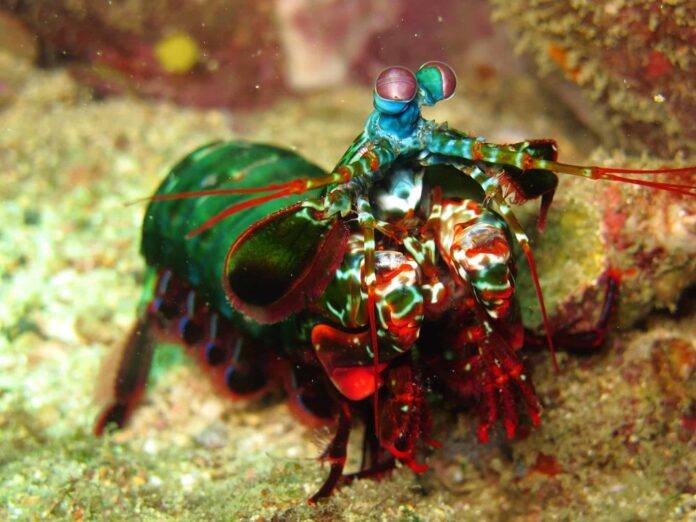
Peacock Mantis Shrimp (Odontodactylus scyllarus)

Peacock mantis shrimp are amazing creatures that are found in the Indo-Pacific region. They are known for their powerful claws, which they use to crack open the shells of their prey.

These shrimp are highly intelligent creatures with excellent eyesight, making them skilled hunters. Although they might not be suitable for life in community tanks, peacock mantis shrimp are extremely interesting to watch. Their brightly colored appearance and unique behavior make them a truly captivating addition to a marine aquarium.

Peacock Mantis shrimp are carnivorous, feeding on a variety of meaty foods, such as fish, crustaceans, and mollusks. For that reason, you should keep your shrimp in a species-only tank, as they are aggressive and can harm other tankmates.

If you plan on keeping peacock mantis shrimp, you’ll need a minimum aquarium size of 30 gallons.

Harlequin Shrimp (Hymenocera elegans)

Harlequin Shrimp (Hymenocera elegans)

Harlequin shrimp are an exquisite addition to any aquarium due to their unique feeding habits and striking appearance.

Originating from the Indo-Pacific, these shrimp have specialized claws that they use to flip over and consume the tube feet of starfish, making them obligate starfish eaters. Due to their specific dietary requirements, Harlequin shrimp are best kept in a species-only tank or with peaceful tankmates who won’t be viewed as food.

Harlequin shrimp are relatively low maintenance once their dietary needs are satisfied, and their minimum tank size requirement is just 20 gallons. These shrimp are visually stunning, and their feeding behavior is fascinating to watch, making them an excellent choice for experienced aquarists looking for a unique addition to their marine aquarium.

Blue Ring Octopus (Hapalochlaena sp.)

Blue Ring Octopus (Hapalochlaena sp.)

Before introducing our next enchanting sea creature, a word of warning. Blue Ring octopuses are highly venomous and should only be kept by experienced aquarists.

These enigmatic creatures are native to the Indo-Pacific regions and spend much of the day hiding in caves or crevices, only becoming active at night. Because of their venomous qualities and aggressive nature, Blue Ring octopuses should be kept in a species-only tank.

These creatures are carnivorous and will eat a variety of meaty foods, including small fish, shrimp, and crabs. If you’re an experienced aquarist looking for an intriguing, unique addition to your saltwater tank, a blue ring octopus might be just what you’re looking for.

These highly intelligent creatures have captivating behaviors that make them a joy to watch, but a 30-gallon, single-species tank is essential to keep them healthy and happy.

Flamboyant Cuttlefish (Metasepia pfefferi)

Flamboyant Cuttlefish (Metasepia pfefferi)

The Flamboyant cuttlefish certainly lives up to its common name, and if you’re looking for a visually stunning and fascinating invertebrate to add to your aquarium, this creature is an excellent choice.

These cuttlefish are found across the Indo-Pacific regions and are well-known for their amazing, vibrant colors and unique swimming style. What’s even more impressive is their ability to change color and texture to blend in with their surroundings, making them incredibly interesting to observe in your aquarium.

However, it’s important to note that Flamboyant cuttlefish must have a species-only tank or a few peaceful tankmates that won’t harm them. These glamorous critters are carnivorous and will eat a variety of meaty foods, including shrimp, fish, and crustaceans, which is another reason a species-only tank is a good option for these guys.

As with many of the invertebrates we’ve featured in this guide, the Flamboyant cuttlefish has specific dietary needs, so it’s essential to research their requirements before taking them on.

In terms of tank size, a minimum of 30 gallons is recommended for these creatures. Once their needs are met, the Flamboyant cuttlefish is relatively low maintenance and can make a great addition to your aquarium. Their unique behavior and stunning appearance are sure to captivate the attention of any onlooker.

If you’re an experienced marine hobbyist looking for a unique and visually striking invertebrate to add to your collection, the Flamboyant cuttlefish is definitely worth considering.

Final Thoughts

Whether you have a freshwater or saltwater tank, introducing a few of the unique inverts we’ve featured in this guide can provide endless fascination for you and your visitors!

However, many of these weird and wonderful creatures have very specific care requirements, so please remember to research each species carefully to ensure they are compatible with your aquarium environment and you can meet their specific needs for a long, happy, and healthy life.

Sharing is caring!


Source link

Captiv8 Aquaculture Salt: Initial Insights

0


It has been just about four months since I started using Captiv8 Aquaculture salt and I wanted to provide my initial thoughts on what I have been seeing with my tanks and also some interesting tidbits about the salt itself.

I had been using Instant Ocean salt for a number of years and for the most part I was happy. My corals looked good and the salt was pretty cheap. I did have to supplement magnesium since freshly made batches of salt tested out at around 1270 ppm for that element. I never tested for calcium and alkalinity so I can’t comment on the consistency of those components.

Another knock I had against Instant Ocean is that it mixed up really dirty. I have been told the residue is not harmful to any tank inhabitants but I did wonder if it impacted the mixing pump I had in my salt water mixing drum. It seized up on occasion despite regular maintenance. The Captiv8 salt mixes up very clean.

A Brown-out Incident

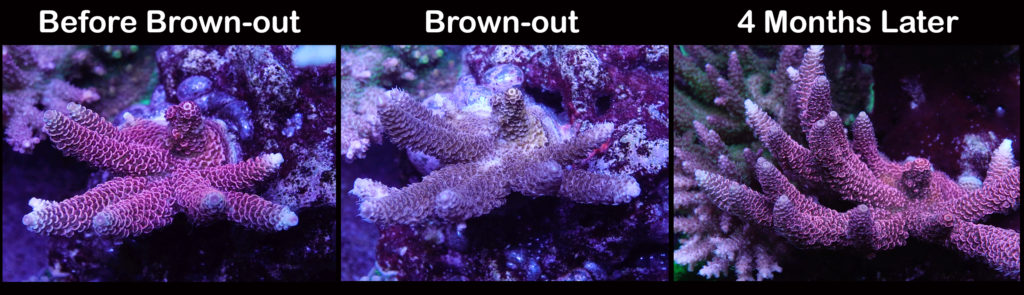
Ok, as for my corals, they had been looking good with Instant Ocean. But there were three browned-out corals in my peninsula tank that started to color back up after using Captiv8 salt. I believe they had browned out due a rise in phosphate but that is just a theory of mine.

I should also mention that I started to dose some Captiv8 Aquaculture trace elements around the same time I started to use the salt. At this point I am still dialing in those traces based on some ICP testing I am doing with Reef Labs.

Anyway, the first of the three pictures below is what one of those three corals, a gorgeous BC Day Glow Millie, looked like before the brown out. The second is a picture of it after it browned out. Now check out the third picture four months later. The pink coloration has certainly returned.

BC Day Glow Millie

A large Orange Cap was another coral that had lost color, but today the orange is much more vibrant. A Paletta Pink Tip was the third coral that had browned out but today it is looking much more colorful. Did the Captiv8 salt and traces make a difference? I can’t definitively say they did but I did not make any other major changes to my systems during this time frame.

Why Switch Salts When Results Are Good With Incumbent Salt?

Ok, so let’s back up a bit here. Why did I make the switch to the new salt if I was pretty happy with what I had been using? Well, I was worried about some of the major issues that have occurred with certain mass-produced salts. Some inconsistencies in batches for these brands led to major tank issues for a number of reef keepers. Could this happen to Instant Ocean? I don’t know.

When I started to use the Captiv8 salt, Chris Wood, who is the founder and sole owner of the company, told me I would not have to test for any elements when mixing up new batches of salt. He said it was extremely consistent batch to batch. That was a huge plus for me.

He explained the consistency is due to the way the salt is produced. There are four components, two are dry and two are liquids. The raw materials sourced for these components are very pure, greater than 99%. As long as the end user measures these components accurately when mixing up a new batch of salt, the elements in the salt will be very consistent batch to batch. Thus, no need to measure stuff when making up a new batch of salt.

Consistency of Components in Other Salt Brands

This type of consistency batch to batch for other salt brands that use only dry components may be harder to achieve. Let’s say another salt brand uses ten different dry components for their mix. It is likely that the densities for some of these components will be different. Higher density components will gravitate towards the bottom during the mixing process at the factory. Thus, the blend will not be 100% homogenous due to the different densities of the components.

Hey, perhaps there is a way to overcome this mixing issue. I know many folks have had great experiences and no issues with other salt brands. Consider my rationale and observations as food for thought when considering what salt to use for a reef tank.

Additional Resources

If you would like some help with a new tank build, including help designing a custom aquarium, or help re-configuring your current setup then you can visit this page for more information. And if you are looking to add some equipment, I do sell GHLPax BellumReef Octopus Calcium and Kalk Reactors and Royal Exclusiv products, including Dreamboxes, which is the equipment I use and recommend. I also sell Reef Brite metal halide and LED fixtures as well as Maxspect & IceCap Gyres.

As for additional insights and information, please explore my many other reef tank and SPS related articles as well as my YouTube channel. For an even deeper dive into reef tank care you can check out my Reef Keeping Master Class. This online course is an immersive and one of a kind educational tool designed to help reef aquarium hobbyists build and maintain a beautiful SPS reef tank. The course is a series of video presentations with some supplemental video from my YouTube channel. There are also quizzes to help students retain and understand the information presented in the course.

Need some frags…..I can help with that as well 🙂 Please visit my SPS Frag store to see what is available.


Source link

6 Colorful Saltwater Fish: Stunning Aquarium Additions

0


Sharing is caring!

Although caring for marine fish can be challenging, they are undoubtedly among the most colorful aquatic creatures you can keep as pets, turning your marine or reef tank into a vibrant underwater paradise.

Here are six stunning, reef-safe species guaranteed to make your tank pop!

Key Takeaways

  • Caring for marine fish like the Mandarinfish and Royal Gramma involves providing an environment with plenty of live rock and hiding spots and a diet suited to their carnivorous needs; they also display unique behaviors such as changing colors and complex mating dances.
  • Flame Angelfish and Moorish Idols are vibrant and active fish that need spacious tanks and a balanced diet but are territorial; Flame Angelfish are suitable for reef aquariums, while Moorish Idols are better for experienced aquarists.
  • Regal Angelfish and Powder Blue Tangs require meticulous care, especially regarding their diet and tank environment. They can be aggressive toward similar fish, so it’s recommended to introduce Powder Blue Tangs to the tank last to minimize aggression.

Summary Table

Here’s an at-a-glance overview of all the colorful fish species we’ve featured in this article!

Common Name Scientific Name Size Diet Water Parameters Minimum Tank Size Lifespan Average Cost
Mandarinfish Synchiropus splendidus 3-4 in Small crustaceans, copepods 72-78°F, sg 1.020-1.025, 8-12 dKH, pH 8.1-8.4 30 gallons 10-15 years $15-$50
Royal Gramma Gramma loreto 3 in Meaty foods, mysis, brine shrimp 72-78°F, sg 1.020-1.025, 8-12 dKH, pH 8.1-8.4 30 gallons 5+ years $20-$40
Flame Angelfish Centropyge loriculus 4 in Algae, frozen/live foods 72-78°F, sg 1.020-1.025, 8-12 dKH, pH 8.1-8.4 55 gallons 5-7 years $50-$80
Moorish Idol Zanclus cornutus 7 in Omnivorous, plant matter, invertebrates 72-78°F, sg 1.020-1.025, 8-12 dKH, pH 8.1-8.4 125 gallons 5+ years $50-$100
Regal Angelfish Pygoplites diacanthus 10 in Algae-based foods, meaty treats 72-78°F, sg 1.020-1.025, 8-12 dKH, pH 8.1-8.4 70 gallons Up to 20 years $100-$150
Powder Blue Tang Acanthurus leucosternon 10 in Algae and seaweed 72-78°F, sg 1.020-1.025, 8-12 dKH, pH 8.1-8.4 125 gallons 10+ years $60-$150

Please note that the water parameters provided are general ranges suitable for most marine fish. Specific care might require slight adjustments within these parameters. Lifespan and cost can vary based on several factors, such as the fish’s origin, size, and overall health when acquired.

Mandarinfish (Synchiropus splendidus)

Mandarinfish (Synchiropus splendidus)

The Mandarinfish, also known as the Mandarin dragonet, is one of the most beautiful and popular species of marine fish in the hobby.

These small, peaceful fish are native to the Pacific Ocean and are famous for their vibrant colors and unique patterns. They are a popular choice for reef aquariums and do best when kept in well-established tanks containing plenty of live rock and hiding spots, as they prefer to spend most of their time hiding out in crevices and caves.

Mandarinfish are carnivorous and feed primarily on small crustaceans and copepods, making them a perfect addition to a mature reef tank with an established population of these organisms. These fish need a well-balanced diet and need multiple daily feeds to keep them healthy.

Mandarinfish are not just pretty to look at; one of the most fascinating things about them is their mating behavior. During the breeding season, males perform an intricate courtship dance to attract a female, and the pair will then rise up into the water column to release their eggs and sperm.

However, breeding Mandarinfish in captivity can be extremely difficult and is usually only achieved by experienced hobbyists or commercial breeders. Overall, Mandarinfish are an excellent addition to any marine aquarium due to their mesmerizing appearance, peaceful nature, and fascinating behavior.

Royal Gramma (Gramma loreto)

Royal Gramma (Gramma loreto)

The Royal Gramma, also known as the Fairy Basslet, is a species of fish native to the Caribbean Sea and western Atlantic Ocean. Aquarists prize this fish for its striking purple and yellow coloration, which makes it stand out in any marine aquarium.

Despite their vibrant appearance, Royal Grammas are relatively hardy and adaptable, making them ideal for both beginner and experienced aquarists. These fish are naturally peaceful characters that can coexist with a variety of tankmates, including other small fish and invertebrates. This makes them an excellent choice for community reef aquariums.

Royal Grammas prefer aquariums with plenty of rocky caves, crevices, and overhangs where they can retreat when feeling threatened. These fish are known to be territorial and will defend their favorite hiding spots against other fish, so it’s important to provide ample hiding places for each individual fish in the tank.

In terms of diet, Royal Grammas are strict carnivores and will thrive on a diet of meaty foods, and are especially partial to mysis shrimp and brine shrimp. They should be fed small amounts several times a day, rather than one large portion, to prevent overeating and digestive problems that could result.

One interesting behavior of Royal Grammas is their ability to change color depending on their mood. When feeling stressed or threatened, they often darken their coloration to blend in with their surroundings and avoid attracting attention. But when feeling relaxed and comfortable, they display their vibrant colors to full effect. That can be a handy barometer for their owners, enabling them to tell whether the conditions in the tank are correct for these fish.

Flame Angelfish (Centropyge loriculus)

Flame Angelfish (Centropyge loriculus)

Flame Angelfish are tropical marine fish native to the Indo-Pacific region, including the Red Sea and the Great Barrier Reef. These fish are popular among aquarium hobbyists for their stunning orange-red coloration and unique markings, which make them stand out in any marine aquarium.

In addition, these glorious marine fish are relatively easy to care for and can adapt to a wide range of water conditions. Ideally, you need a tank with a minimum capacity of 55 gallons for Flame Angelfish. They are reef-safe, coexisting peacefully with corals and other invertebrates without causing any damage.

When it comes to diet, Flame Angelfish are primarily herbivores, requiring a diet rich in algae for optimal health. They also appreciate a variety of frozen and live foods, such as brine shrimp, krill, and mysis shrimp, which gives them all the nutrients they need.

Flame Angelfish are quite lively and active and can be pretty territorial, especially towards other fish of the same species or similar appearance. Therefore, it’s best to keep them in a species-specific tank or with other peaceful fish that won’t compete for resources.

Moorish Idol (Zanclus cornutus)

Moorish Idol (Zanclus cornutus)

Moorish Idols are striking fish found in the Indo-Pacific region. They are instantly recognizable by their amazing black, white, and yellow coloration, which makes them extremely popular among marine aquarium enthusiasts.

Despite their delicate appearance, Moorish Idols are relatively hardy and can adapt well to aquarium life. However, they require a large tank with plenty of swimming space and hiding spots.

These fish are known for their unique body shape and elongated dorsal fin, which can be up to two-thirds the length of the creature’s whole body. This fin is used for communication and display, making it an important part of the Moorish Idol’s courtship behavior. In the wild environment, you generally see these fish in pairs, so it’s best to replicate that in the aquarium if you can find a mated pair. Although not particularly aggressive, these fish can be territorial and feisty toward their tank mates.

Moorish Idols are omnivores and feed on a variety of plant matter, algae, and small invertebrates in the wild. In an aquarium setting, they should be fed a diet that includes both plant matter and protein-rich foods like brine shrimp and krill. It is important to ensure they receive a balanced diet to maintain their health and vitality.

These elegant fish make a fabulous addition to a large marine tank. However, they are unsuitable for novice aquarists and require significant care and attention to thrive in captivity.

Regal Angelfish (Pygoplites diacanthus)

Regal Angelfish (Pygoplites diacanthus)

Regal Angelfish are native to the Indian and Pacific Oceans, where they inhabit coral reefs and lagoons.

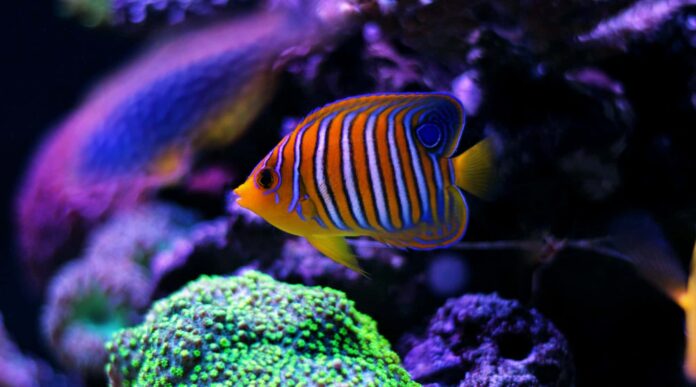
They are popular and highly sought-after fish with stunning blue and yellow coloration, which makes them an exquisite addition to any aquarium. However, the Regal Angelfish is not recommended for beginners because of its very specific care needs.

These fish need a well-established marine aquarium with lots of live rock and hiding places where they can feel safe and protected. This is because Regal Angelfish are naturally shy and prefer to spend much of their days hiding in rocky overhangs, crevices, and caves.

The Regal Angelfish eats both algae-based foods and meaty treats. One thing that makes these fish tricky to keep in captivity is their picky eating habits, and they often take a while to adjust to their new surroundings and food. It’s typically best to offer a few small feeds throughout the day rather than one large feed.

Regal Angelfish can be aggressive towards their tank mates, especially if they are of a similar size or color. Therefore, we recommend keeping them with other peaceful species that won’t compete for food or territory.

Powder Blue Tang (Acanthurus leucosternon)

Powder Blue Tang (Acanthurus leucosternon)

The Powder Blue Tang is a fascinating fish species from the Indo-Pacific region’s warm waters.

These fish are known for their stunning powder blue coloration and distinctive yellow dorsal fin, making them a favorite among many marine enthusiasts. Powder Blue Tangs are best suited for large, well-established reef aquariums with plenty of swimming space.

These fish are herbivores and require a diet rich in algae and seaweed. They should be fed at least three times a day to ensure that they receive all the nutrients they need to thrive. When it comes to water conditions,

It is important to note that Powder Blue Tangs can be aggressive towards other tangs, so they are recommended to be kept as the only tang in the aquarium. However, they are generally peaceful towards other tankmates and can be kept with a variety of other fish species as long as they are not aggressive towards them.

Powder Blue Tangs are active swimmers and require plenty of open swimming space unobstructed by hardscape and decorations. If you are considering adding a Powder Blue Tang to your aquarium, it is important to bear in mind that these fish can grow up to 10 inches in length. Therefore, you must provide them with a large enough tank to accommodate their size. Additionally, most experienced keepers recommend that you introduce this species to the aquarium last to reduce the risk of aggression towards other tankmates.

Final Thoughts

Adding any of these spectacular saltwater fish to your aquarium is sure to impress and delight your friends when they call around to view your tank.

However, many of these fish species have very specific care requirements, which makes them unsuitable for novice hobbyists. In addition, most of these fish are super-expensive to buy, so you must be confident you can provide your chosen species with everything it needs to thrive before you part with your cash.

Sharing is caring!


Source link

Let Corals Breathe: Insights From a Shipping Experiment

0


Over the years I have shipped a lot of coral frags overnight to customers using either FedEx or UPS. Initially, I used FedEx but I switched to UPS after FedEx screwed up and delivered some packages a day late. Frags are much more prone to die when in transit for two days versus a day.

UPS had been super reliable for me up until the pandemic hit. There were a few instances during the past year when packages didn’t make it the next day and, as a result, some corals didn’t survive. Was this due to labor shortages in the overnight shipping business? Could more extreme weather be part of the problem?

Plan to Overcome Shipping Issues

My solution was to do everything possible to increase the survival rates of my corals if there were any delays. I polled a few coral farming colleagues to see what their best practices are for shipping corals.

Some believe that oxygen can help keep corals alive longer while in transit. It makes sense since corals are animals and require oxygen. Others feel a few pieces of activated carbon in the bag will help reduce mortality rates. The theory here is that activated carbon will help absorb any toxins that may develop due to dying bacteria during shipping delays.

Armed with this information, I decided to do an experiment to see if I should change my shipping methods.

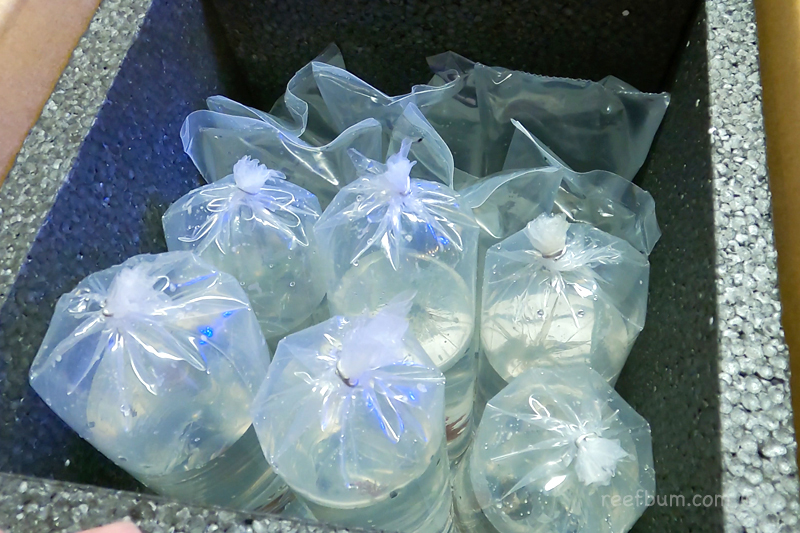
I put three different SPS frags in bags with only tank water (no air). The bags were then sealed up with a plastic bag heat sealer, the method I had been using to this point. Next, I bagged up the same types of frags in bags with tank water and oxygen. I bagged up another set of the same frags using tank water, oxygen and activated carbon.

I put all the bags in the same insulated box and sealed it up with tape. I left the box near my furnace since that location is relatively warm (around 70 degrees Fahrenheit). Temperature is certainly a big factor when shipping corals but for this experiment I wanted to test oxygen and activated carbon as the variables.

shipping corals with oxygen

Results From Experiment

Over a five-day period I opened the box up daily to check on the corals. What did I learn? Most of the corals that survived the longest had oxygen and activated carbon in the bag.

Well, these findings convinced me to use both oxygen and activated carbon in the future when shipping corals. I did have to spend a decent chunk of change on an oxygen setup and a new bag sealer. But I felt it was a worthwhile investment given the state of the overnight shipping industry.

Additional Resources

If you would like some help with a new tank build, including help designing a custom aquarium, or help re-configuring your current setup then you can visit this page for more information. And if you are looking to add some equipment, I do sell GHLPax BellumReef Octopus Calcium and Kalk Reactors and Royal Exclusiv products, including Dreamboxes, which is the equipment I use and recommend. I also sell Reef Brite metal halide and LED fixtures as well as Maxspect & IceCap Gyres.

As for additional insights and information, please explore my many other reef tank and SPS related articles as well as my YouTube channel. For an even deeper dive into reef tank care you can check out my Reef Keeping Master Class. This online course is an immersive and one of a kind educational tool designed to help reef aquarium hobbyists build and maintain a beautiful SPS reef tank. The course is a series of video presentations with some supplemental video from my YouTube channel. There are also quizzes to help students retain and understand the information presented in the course.

Need some frags…..I can help with that as well 🙂 Please visit my SPS Frag store to see what is available.


Source link

Mastering African Water Fern Care: A Complete Guide

0


African Water ferns or Bolbitis Heudelotii are a type of aquatic plant that is native to tropical rainforests. They are characterized by their delicate, feathery leaves and their ability to grow in a variety of conditions. Water ferns are a popular choice for aquariums, as they can help to improve water quality and provide a natural habitat for fish and other aquatic life.

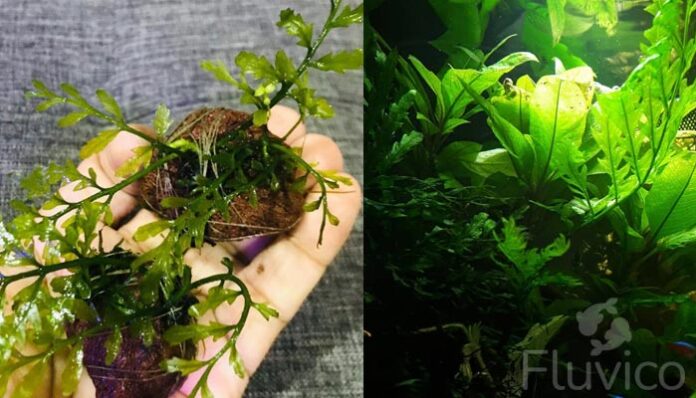
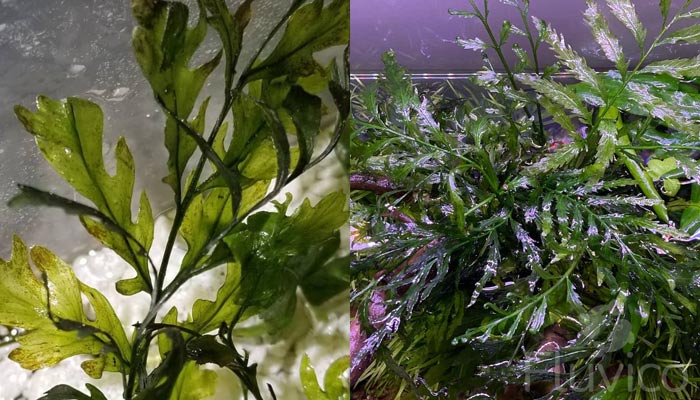
African water fern close-upAfrican water fern close-up

Quick fact about African Water Fern Plants

Fact Details
Scientific Name Bolbitis Heudelotii
Common Name African Water Fern
Native Region Africa and Asia
Max Size (Approx) Up to 18 inches (45 cm)
Lighting Requirements Prefers low to medium light
Water Conditions pH 6.0-7.0, Temperature 68-82 degrees °C
Growth Rate Slow
Tank Placement Attached to Decor

What is an African Water Fern?

The African Water Fern, scientifically known as Bolbitis Heudelotii, is a captivating addition to any aquarium. Native to the damp, shaded regions of Africa and Asia, this plant thrives in both submerged and semi-aquatic environments.

Its feathery, lace-like leaves create an aesthetic appeal, while its slow growth and adaptability make it a low-maintenance choice for all aquarists. Patience is key with this plant, but over time, it brings a lush, enduring beauty to any aquarium

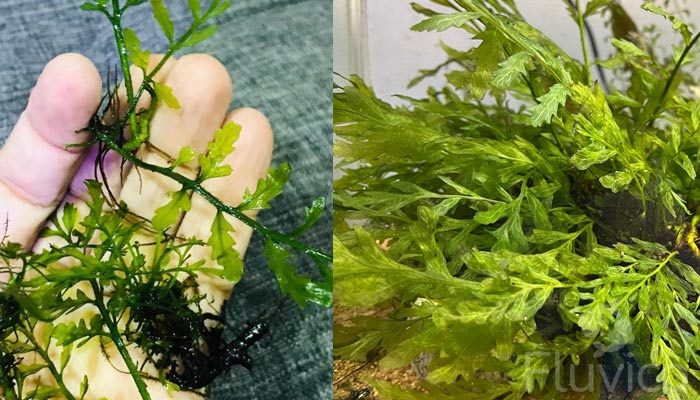
African water fern propagateAfrican water fern propagate

What About Watering Ferns with Epsom Salt?

Some people recommend watering ferns with Epsom salt, a mineral compound made of magnesium and sulfate. Epsom salt is said to help ferns grow lush and green by providing them with magnesium and sulphate, which are essential nutrients for plant growth.

However, there is no scientific evidence to support the claim that watering ferns with Epsom salt is beneficial. In fact, some experts believe that Epsom salt can actually be harmful to ferns, as it can raise the pH of the water and make it more alkaline.

If you are considering watering your ferns with Epsom salt, it is important to do your research and weigh the risks and benefits. There is no guarantee that Epsom salt will help your ferns grow better, and it may actually do more harm than good.

Here are some of the potential risks of watering ferns with Epsom salt:

  • Epsom salt can raise the pH of the water, making it more alkaline. This can stress the plant and make it more susceptible to disease.
  • Epsom salt can burn the roots of the plant.
  • Epsom salt can make the leaves of the plant yellow.

If you are looking for a way to improve the health of your ferns, there are other, more effective methods. Here are a few tips:

  • Provide your ferns with bright, indirect light.
  • Fertilize your ferns regularly with a balanced fertilizer.
  • Trim your ferns regularly to keep them healthy and prevent them from becoming overgrown.
  • Keep the water in your aquarium or pond clean and free of debris.

Vivariums

The African Water Fern, or Bolbitis Heudelotii, is versatile and can thrive in several types of vivariums. Here are some common setups where this fern can be incorporated:

Aquariums: This is perhaps the most common setup for the Ferns. It thrives in both fully submerged and semi-aquatic conditions. Its elegant, feathery fronds create an attractive backdrop and provide excellent cover for fish and invertebrates.

Paludariums: These are setups that combine terrestrial and aquatic elements, usually with part of the tank filled with water and part left dry to mimic a riverside or shoreline. The Water Fern can be situated in the water or on the water line, adding a lush, green aesthetic to the landscape.

Terrariums: Although not as common, the plant can also be grown in high-humidity terrariums, especially those designed to mimic a rainforest environment. Here, the fern can be placed in a shaded area with high humidity, but care should be taken to ensure the soil doesn’t become waterlogged.

Ripariums: Similar to paludariums, ripariums simulate a riverbank environment, but the terrestrial part is much more reduced, almost resembling a marsh. The Fern can be attached to driftwood or rocks placed semi-submerged in the water, where it can grow in and out of the water.

Growing African Water Ferns

Tank Sep up

Setting up a tank for African Water Fern involves a few key steps:

  • Choose the Right Tank Consider a medium to large tank as Water Fern can grow up to 18 inches. Make sure it’s watertight and clean.
  • Substrate Ferns grow by attaching their rhizomes to objects, so you can opt for a basic gravel or sand substrate. However, if you plan on having other plants that root in the substrate, consider a nutrient-rich aquatic plant substrate.
  •  Install Lighting Install a low to medium intensity aquarium light. Set it on a timer to mimic natural day-night cycles.
  • Set Up Filtration Install an aquarium filter suitable for the size of your tank. This will help maintain water quality by removing excess nutrients and waste.
  • Set Up Heating Install a water heater to maintain a consistent water temperature between 68 to 82 degrees Fahrenheit (20 to 28 degrees Celsius).
  • Water Conditions Fill the tank with dechlorinated water and use a water testing kit to check the pH level. Aim for slightly acidic to neutral water (pH 6.0 to 7.0).
  • Add Décor Add items such as rocks, driftwood, or ornaments for the fern to anchor onto.

Planting African Water Fern

Planting Water Fern i involves a few straightforward steps:

Step 1: Select a Suitable Object

Choose an item for the plant to anchor onto. This could be a piece of driftwood, a rock, or any aquarium-safe decoration.

Step 2: Preparation

Take your Fern plant and gently clean any debris from the rhizomes, being careful not to damage them.

Step 3: Attachmen

Wrap the rhizome of the plant around your chosen object. It’s okay if it doesn’t wrap completely, as it will grow and cover the surface over time.

Step 4: Secure the Plant

Use fishing line or cotton thread to secure the plant to the object. The line or thread should be snug but not overly tight, so as not to damage the plant.

Step 5: Positioning

Place your newly planted plant into the aquarium, ideally in a location with low to medium light.

Step 6: Patience

Wait for the plant to establish itself naturally. It will slowly but surely start to grow and cover the surface of the object, adding a beautiful touch of greenery to your aquarium.

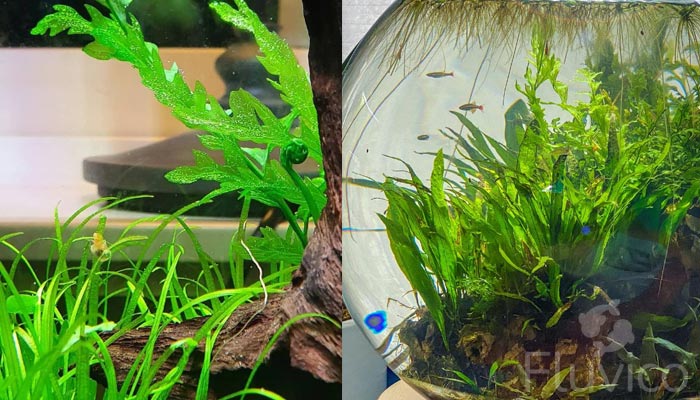
African water fern- n small tankAfrican water fern- n small tank

Growth Rate and Height

Bolbitis Heudelotii is a slow grower, which makes it easy to manage in both small and large aquarium settings. While its pace might test your patience, the wait is worth it as it gradually develops into an eye-catching feature in your setup.

In terms of height, it’s no small fry either. With optimal care and conditions, this fern can reach a height of up to 18 inches. Remember, steady growth means a healthier plant, so sit back and enjoy the gradual unfurling of each new leaf.

Co2 Requirement

Water Ferns can thrive without additional CO2 supplementation. It’s quite adaptable and capable of growing in a variety of conditions, including tanks with low CO2 levels.

However, if you’re aiming for a denser, more lush growth or have a densely planted tank, supplemental CO2 can be beneficial. It can boost the plant’s growth and help it reach its full potential faster.

While CO2 supplementation can enhance the fern’s growth, it’s not a strict necessity. Consistently monitoring and maintaining other factors like lighting, temperature, and water pH also play significant roles in the plant’s overall health and growth.

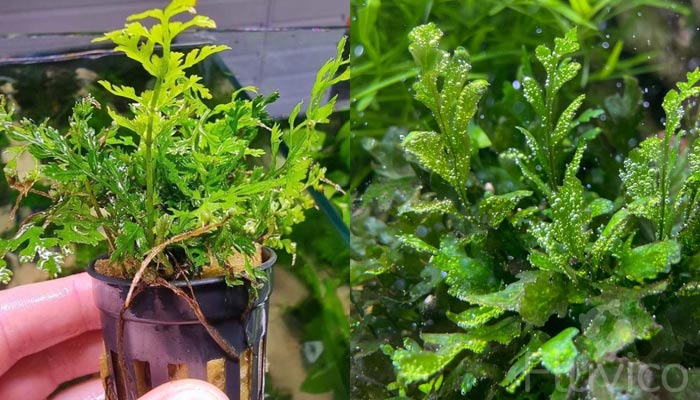
African water fern small potAfrican water fern small pot

How to Trim

  • Identify: Start by identifying the parts of the fern that need trimming. Look for leaves that are yellowing, brown, or show signs of disease.
  • Prepare: Equip yourself with a sharp pair of aquascaping scissors to ensure clean cuts and minimal damage to the plant.
  • Cut: Trim away the affected leaves at the base, near the rhizome. Be careful not to damage the rhizome or healthy leaves.
  • Remove: After trimming, remove the cut leaves from the water immediately. Decaying plant material can lead to poor water conditions.
  • Monitor: Observe the fern after trimming. It should start growing new leaves from the rhizome.

African Water Ferns the Right Way: Some Best Practices

Watering ferns, especially water ferns like Bolbitis Heudelotii, deviates from typical houseplant watering. Rather than direct watering, they thrive in specific aquatic environments. Here are some best practices to ensure your ferns are watered the right way:

  • Cleanliness: Regularly change a portion of the water in your tank, depending on its size and fauna. This helps maintain a clean environment and reduces the chances of disease and algae growth.
  • Fertilizer: Although not a must, you can consider using a water-soluble fertilizer. However, be careful with the amount, as too much can lead to excessive algae growth.
  • No Overcrowding: Ensure your ferns have enough space to grow. Overcrowding can hinder growth and lead to competition for resources.
African water fern tank matesAfrican water fern tank mates

Tank Mates

African Water Fern, is a peaceful plant that generally pairs well with a variety of tank mates. Here are a few suggestions:

Fish: Due to its sturdy structure, the fern can handle various species of fish. Smaller fish like tetras, guppies, or rasboras will appreciate the cover the fern provides. Larger, peaceful fish, such as angelfish or discus, can also share a tank with this fern. However, avoid housing the fern with plant-eating fish or those known for uprooting plants.

Shrimp and Snails: These invertebrates make excellent tank mates for the African Water Fern. They help clean the tank by consuming algae and leftover food, contributing to a healthier environment for your fern.

Other Plants: Ferns gets along well with other aquatic plants. It can create a pleasing backdrop for foreground plants like Anubias or Java Moss.

FAQ

Is Water Fern Easy to Grow?

Yes, Bolbitis Heudelotii is relatively easy to grow. It’s a resilient plant that adapts well to various conditions, making it a great choice for beginners. Despite its slow growth, with consistent care, it flourishes into a beautiful aquatic fern.

Can Water Fern grow emersed?

While Bolbitis Heudelotii thrives when fully or semi-submerged, it can also grow emersed in humid conditions. However, the transition from submerged to emersed growth should be gradual to prevent the plant from experiencing shock.

Is Water Fern an invasive species?

Yes, African water fern is an invasive species. It is a fast-growing, free-floating fern that can form dense mats on the surface of water. This can block sunlight, reduce oxygen levels, and outcompete native plants.

What are the negative effects of Water Ferns?

While water ferns like Bolbitis Heudelotii are generally beneficial in aquariums, they can potentially cause issues if not properly managed. Overgrowth can obstruct light to other plants, and decayed fern matter can negatively impact water quality if not promptly removed.


More Reading


Source link

How To Grow Live Phyto – Step by Step Guide

0


Why raise live phyto? Well, they are an important part of the food chain in a reef tank. Phytoplankton is a small, photosynthetic, micro-algae that takes in nutrients and carbon dioxide to create fatty acids that are very important for all organisms in the tank. Phyto is consumed by filter feeders and copepods, which can pass the fatty acids on to fish that consume the pods. A big plus is the fact that corals will also consume phyto. Side benefits are the reduction of nitrates and phosphates and a higher PH.

The Basic Setup

What are the steps for setting up live phyto cultures? You essentially need to provide a clean environment for the phytoplankton to grow, some air to keep the water moving and oxygenated, a light source, some food, and a starter culture.

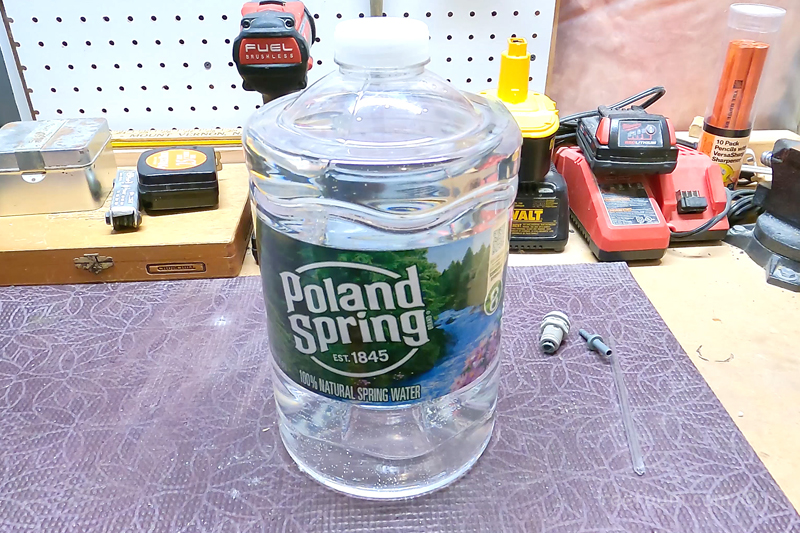
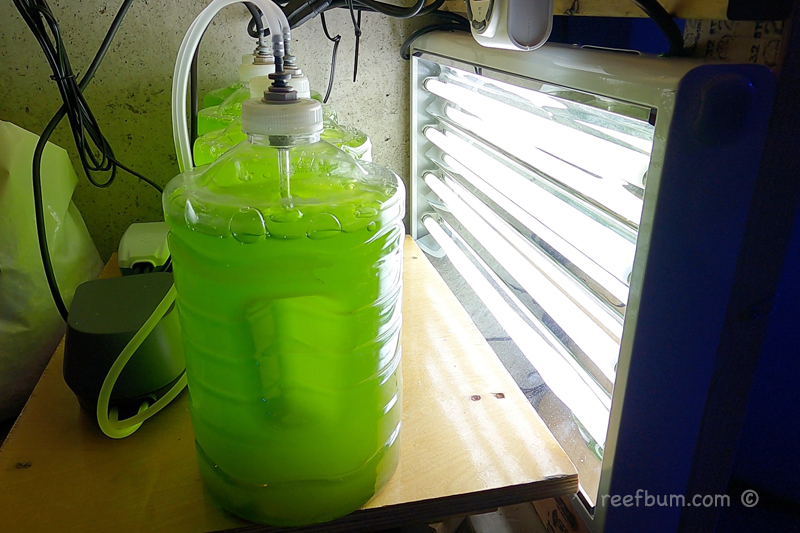
For growing containers you can use some one gallon transparent bottles. Target has some distilled water bottles that are perfect to raise phyto. Poland Spring sells some water containers that seem to be just as good as the Target containers, but they are a bit smaller. I ended up using four Poland Spring bottles.

Poland Spring 3 liter bottle

The dilution factor for creating a phyto culture is one to one so you will want to fill one half of the container with a phyto culture and the other half with freshly mixed saltwater. Don’t use established tank water since it will contain bacteria that can contaminate the culture.

The Poland Spring containers can hold about one hundred ounces of liquid so I mixed fifty ounces of phyto culture with fifty ounces of fresh saltwater inside each container. The specific gravity of the saltwater to add to the culture should be 1.020 but going up to 1.026 is fine.

Feeding the Cultures

The other thing you will need to add to each container is some fertilizer to feed the phyto. Buy a small bottle since it is not good for it to sit around for a while. After six months it can lose its potency or go bad. I used this fertilizer from Amazon. The fertilizer should be stored in a cool and dry place, not a refrigerator.

1 milliliter of fertilizer should be used for one gallon of phyto. You can use a 1 milliliter syringe, I use one from a Salifert test kit, to measure out the fertilizer. Just make sure you sanitize the syringe after each use by rinsing it with some tap water and then with some hydrogen peroxide.

Inside each container I connected one quarter inch rigid airline tubing to a one quarter inch John Guest bulkhead union, which I inserted through a hole I drilled in the cap of the bottle. A one quarter inch John Guest Stem Barb Connector was connected to the top of the bulkhead to accommodate the one quarter inch flexible tubing that runs to the air pump.

Aeration

I use two air pumps, one pump each for two bottles of phyto. Make sure you drill one small hole in the bottle cap to vent out the air being forced into the bottle. Don’t use an air stone at the end of the rigid tubing.

As for lighting, any cheap T5 fixture with horticulture bulbs will do. I picked up a fixture from Amazon that is twenty four inches long and has four twenty four watt bulbs. It is perfect for lighting up four bottles of phyto. I turned the fixture on its side to maximize the amount of light illuminating the containers, which are about five to six inches away. The light stays on for twelve hours a day.

lighting for growing phytoplankton

The culture should be grown for one week and then stored in a refrigerator, where it can last for up to a month. The temperature in the room where the cultures are being grown should be between seventy to eighty degrees Fahrenheit. The culture will not grow as fast if it is too cold.

Keep Things Clean

You can reuse the bottles to grow new cultures but they need to be sanitized. Clean them with approximately hundred milliliters of hydrogen peroxide. Cover the cap of the bottle and shake it for a minute so that the hydrogen peroxide can coat the inside of the bottle. Let it stand for a minute or two and then empty the container.

Hydrogen peroxide will rapidly degrade to water and oxygen so you can use the bottle after that. Take the rigid airline tubing out and rinse it separately with water and then with hydrogen peroxide.

How Much to Dose

In terms of how much Phyto to add to a tank, you can start by dosing one ounce of phyto for every fifty gallons of system water. Include the sump in your calculations.

The dosage is just an estimate, more or less is no big deal. You can go up to two ounces per twenty-five gallons of system water. Consumption of the phyto will depend on how well the tank is stocked with corals. There is no harm to over dose. If you see green dust growing on the tank walls, then you can back down a little.

If you have a UV sterilizer make sure you shut it off for an hour after dosing phyto. It will also help to shut off the skimmer. The best time to dose is when the polyps on LPS, SPS and softies are out the most so any time after the lights are out during the evening or morning.

Additional Resources

If you would like some help with a new tank build, including help designing a custom aquarium, or help re-configuring your current setup then you can visit this page for more information. And if you are looking to add some equipment, I do sell GHLPax BellumReef Octopus Calcium and Kalk Reactors and Royal Exclusiv products, including Dreamboxes, which is the equipment I use and recommend. I also sell Reef Brite metal halide and LED fixtures as well as Maxspect & IceCap Gyres.

As for additional insights and information, please explore my many other reef tank and SPS related articles as well as my YouTube channel. For an even deeper dive into reef tank care you can check out my Reef Keeping Master Class. This online course is an immersive and one of a kind educational tool designed to help reef aquarium hobbyists build and maintain a beautiful SPS reef tank. The course is a series of video presentations with some supplemental video from my YouTube channel. There are also quizzes to help students retain and understand the information presented in the course.

Need some frags…..I can help with that as well 🙂 Please visit my SPS Frag store to see what is available.


Source link